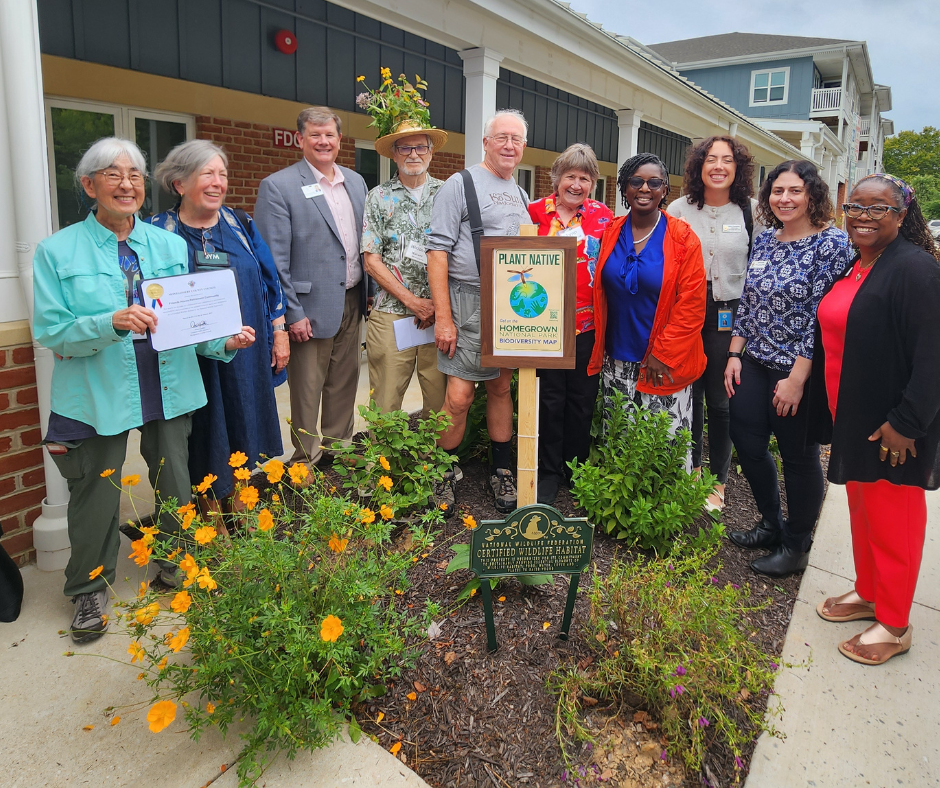
Friends House in Sandy Spring, MD, is officially recognized as a Certified Wildlife Habitat by the National Wildlife Federation (NWF), honoring nearly six decades of eco-conscious living, community collaboration, and a deep-rooted commitment to environmental stewardship.
Friends House: A Certified Wildlife Habitat with Purpose
This remarkable achievement positions Friends House Retirement Community as a leading example of how residential spaces, particularly for older adults, can actively support native ecosystems, pollinators, and biodiversity – while offering residents deeper connections to nature.
With its Certified Wildlife Habitat designation, Friends House joins thousands of gardens, schoolyards, backyards, and parks across the nation that provide food, water, cover, and breeding spaces for wildlife—all part of a growing effort to offset habitat loss and climate impacts.
Rooted in Quaker Values and Sustainability
Founded in 1967 by members of the Religious Society of Friends (Quakers), Friends House stretches across 62 acres of woodlands, meadows, and garden-filled trails. The guiding principles of simplicity, peace, integrity, community, equality, and stewardship (SPICES) have shaped every inch of the landscape. These aren’t just aspirational ideals, they are actively lived.
Today, over 65 residents serve on the community’s Environment Committee. From tree plantings to educational outreach, they work hand in hand with staff and local partners to enhance biodiversity while improving the health and aesthetics of their shared space.
Recent Environmental Milestones That Led to Certification
Forest Conservation Initiatives
Between 2024 and 2025, residents, alongside local organizations and state programs, planted 60 new trees valued at $50,000. With 87 hours of volunteer time logged, this project improved tree canopy, reduced erosion, and added vital habitat for wildlife.
Pollinator Gardens and Native Planting
Underutilized spaces near lodges and main entrances were reimagined into vibrant pollinator gardens using native plants, container gardens, and donated perennials. These gardens now support bees, butterflies, and beneficial insects.
Organic Garden Revamp
The community garden has evolved into a multipurpose hub featuring butterfly habitats, a native plant demonstration zone, and rows of fresh organic produce. It serves both as a food source and educational space.
Bird-Friendly Health Center Landscaping
Seasonal blooms and bird-supportive shrubs now grace the perimeter of the healthcare center, offering beautiful views that improve mental wellness and enhanced comfort to residents receiving care.
Resident-Led Wildlife Monitoring
With the help of the Cornell Lab of Ornithology’s Haikubox, residents have recorded over 185 bird species. Bird walks, trail camera monitoring, and even a resident-organized “goose patrol” ensure that humans and wildlife thrive together.
Educational Pond Activities
The onsite pond has been transformed into a dual-purpose sanctuary – welcoming both wildlife and curious students from Sandy Spring Friends School who learn fishing, ecology, and stewardship from Friends House volunteers.
Eco-Education and Outreach
From film screenings of Doug Tallamy’s native plant movement to soil health lectures and native gardening talks, education is always buzzing at Friends House. Residents routinely share research, lead workshops, and invite guest experts to promote greener living.
Why a Certified Wildlife Habitat Retirement Community Matters
At a time when wildlife populations are under threat and natural habitats are shrinking, communities like Friends House set a powerful precedent. They show that retirement communities can do more than provide housing, they can become sanctuaries for the planet.
A Certified Wildlife Habitat doesn’t just look pretty. It creates a micro-ecosystem where:
- Birds nest and thrive.
- Bees and butterflies pollinate crucial plants.
- Trees and shrubs filter air and provide shelter.
- Residents feel healthier and more connected – to each other, and the planet.
The Impact on Resident Wellness
Nature-based living has far-reaching benefits:
- Lower stress and anxiety
- Improved sleep and cognitive function
- More opportunities for movement and outdoor recreation
- Greater sense of purpose through volunteering and conservation efforts
At Friends House, the environment isn’t just a backdrop – it’s a part of daily life.
A Habitat That Nurtures Life
Friends House proves that it’s possible to live lightly on the Earth without sacrificing comfort or connection. Through decades of resident-led action, strong partnerships, and visionary leadership, this community has built something extraordinary – a home for people and wildlife alike.
As environmental challenges grow, Friends House offers not only hope but a real-world blueprint for how Certified Wildlife Habitat Retirement Communities can become powerful agents of change.
Leading the Way as a Life Plan Community
Friends House operates as a nonprofit Life Plan Community, offering independent living, assisted living, and healthcare services. But what sets it apart is how it integrates sustainability into every level of community care. Here, environmental wellness isn’t a perk, it’s core to the mission.
Living the SPICES Values Through the Land
The SPICES values are not just Quaker philosophy – they are practical, everyday guides for the environmental decisions made at Friends House. Whether it’s hosting a plant swap, expanding a habitat, or removing invasives, these values shape outcomes that benefit both people and the planet.
Sustainability as a Community Identity
Rather than being a top-down initiative, sustainability at Friends House is driven from the ground up. Residents lead. The Friends House leadership supports. And the results speak for themselves: increased biodiversity, restored habitats, and an empowered community.
FAQs
What is a Certified Wildlife Habitat?
A Certified Wildlife Habitat provides food, water, cover, and space for wildlife to raise young. It’s a program by the National Wildlife Federation.
Why did Friends House receive certification?
Friends House was recognized for its long-standing environmental initiatives including pollinator gardens, forest conservation, native planting, and wildlife monitoring.
How does this benefit the residents?
Nature-based environments improve physical and mental well-being. Residents also experience a greater sense of community and purpose.
How is sustainability integrated into daily life at Friends House?
Residents actively garden, attend eco-education events, plant native species, and engage in hands-on conservation efforts.
What types of wildlife are supported at Friends House?
The habitat supports birds, pollinators, butterflies, small mammals, amphibians, and aquatic species around the pond.