Discover how residents are cultivating native habitats, protecting local wildlife and finding meaningful connections through nature.
When Nancy Rea moved to Friends House Retirement Community in Sandy Spring, Maryland, 14 years ago, she worried that leaving her home and garden might mean leaving behind something she loved.
Instead, she discovered neighbors who shared her passion for gardening and protecting the natural environment.
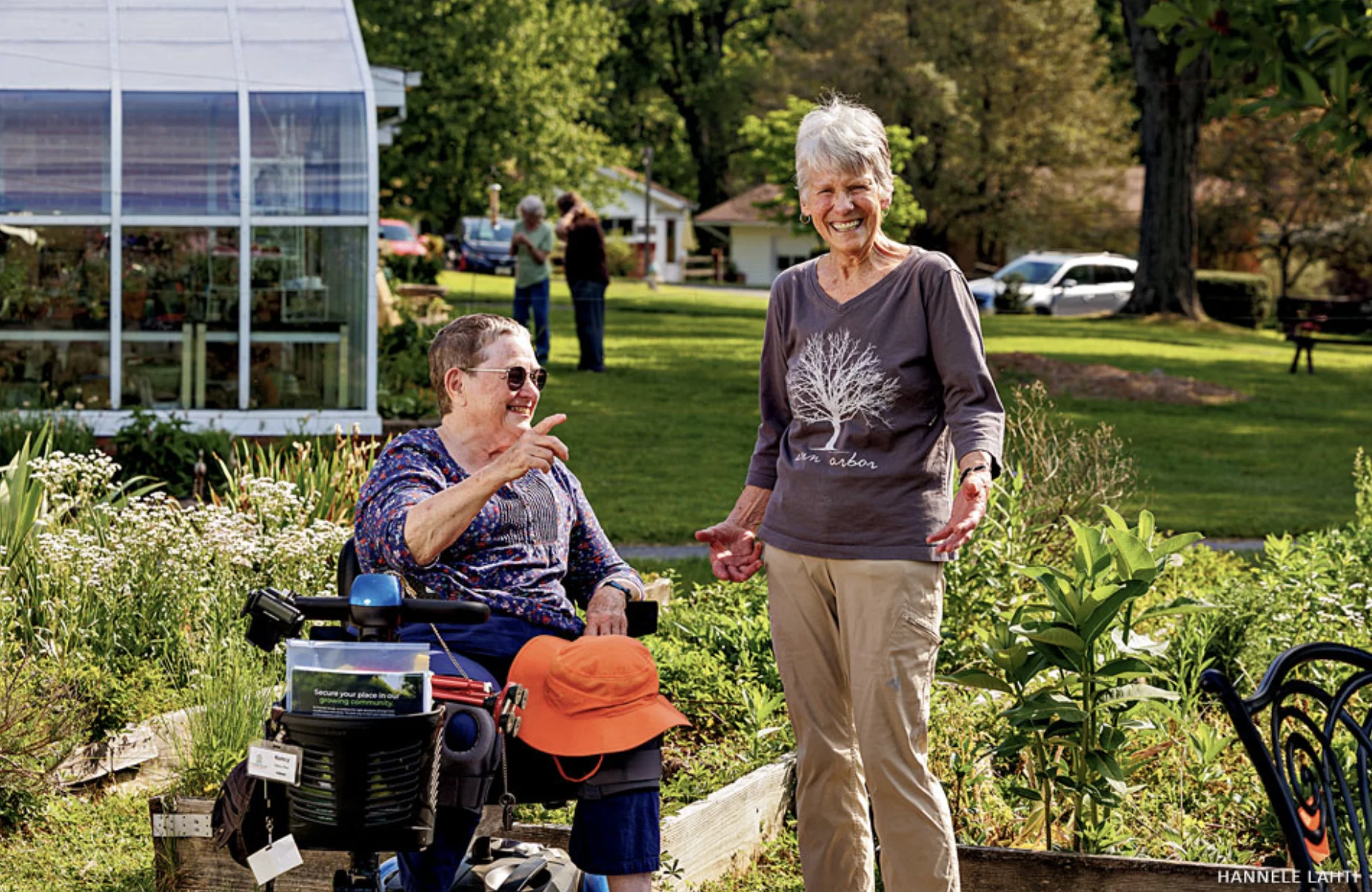
Today, Nancy is among the Friends House residents helping create and care for wildlife-friendly spaces across the community’s 62-acre campus.
Her story, along with the environmental contributions of fellow resident Susan Thomas, is featured in the Fall 2026 issue of National Wildlife magazine.
The article, “Seniors Who Garden Together Age Gracefully Together,” by Doreen Cubie, highlights retirement communities nationwide where residents are creating habitats for wildlife while building connections with one another.
A Natural Connection Between Residents and the Environment
At Friends House, environmental stewardship is part of the community’s character.
The Friends House Environment Committee works closely with community administration to support native plantings, improve wildlife habitat, manage invasive species and consider how the campus landscape can contribute to a healthier ecosystem.
Residents bring different interests and expertise to this work. Some are knowledgeable about plants and trees, while others focus on birds, insects, pollinators and habitat preservation.
The results can be seen throughout the campus, where native plants such as butterflyweed, sweetspire, dogwood, coral honeysuckle and blue wild indigo help support local wildlife.
In 2025, Friends House earned recognition as a Certified Wildlife Habitat through the National Wildlife Federation, reflecting its efforts to provide food, water, shelter and places for wildlife to raise their young while using sustainable gardening practices.
More Than 180 Bird Species and One Remarkable Monarch Butterfly
The National Wildlife article shares some remarkable examples of the biodiversity found at Friends House.
According to Susan Thomas, co-clerk of the Environment Committee, residents have recorded more than 180 bird species on the property.
The campus also supports a variety of other wildlife, including foxes, groundhogs, deer, frogs, turtles and butterflies.
One particularly memorable discovery involved a monarch butterfly tagged at Friends House in September 2025. In February 2026, the butterfly was recovered and released again at El Rosario Sanctuary in Michoacán, Mexico, after traveling nearly 2,000 miles.
It’s an extraordinary example of how the wildlife that passes through Friends House is connected to ecosystems far beyond the community.
Residents continue to document biodiversity through tools such as iNaturalist and eBird, contributing valuable observations about the species found on campus.
Gardens That Support Wildlife and Bring People Together
The environmental work at Friends House extends beyond wildlife observation.
The resident Garden Committee manages vegetable gardens, flower gardens and the greenhouse, including butterfly and cutting gardens, composting areas and an apiary.
These spaces offer residents opportunities to garden, share knowledge, spend time outdoors and connect with neighbors who have similar interests.
As highlighted in the National Wildlife article, some garden areas feature raised beds and paved pathways that help residents with different mobility needs enjoy and participate in the natural surroundings.
For residents like Nancy, access to these spaces means continuing an interest that has been part of life for decades, while discovering new ways to contribute alongside friends and neighbors.
Continuing to Grow and Improve
Friends House is also a registered participant in Homegrown National Park, a nationwide movement encouraging the use of native plants to support biodiversity.
The community received a Wildr assessment score of 92, which considers factors including native species, habitat layers, traditional lawn reduction and ecological practices.
The assessment helps guide the Environment Committee’s ongoing priorities, including expanding native plant communities, continuing the meadow project, managing invasive species and documenting biodiversity.
These initiatives reflect an approach to caring for the land that considers both the immediate Friends House campus and the larger Sandy Spring environment.
Where Caring for Nature Is Part of Community Life
For Friends House, recognition in a national publication is meaningful. But the greater story is what residents are accomplishing together.
From sharing gardening knowledge to identifying birds and creating healthier wildlife habitats, residents are actively helping shape the environment they call home.
Their efforts demonstrate how retirement living can offer opportunities to continue lifelong interests, develop new ones and make meaningful contributions to the surrounding community.
Read the full story: Seniors Who Garden Together Age Gracefully Together, National Wildlife magazine.
Discover life at Friends House. Learn more about our community, campus and opportunities for resident involvement at FriendsHouse.com, or call (301) 450-0884 to schedule a visit.